

What is Milk Thistle?
Send all comments or additions to: Frankp@chiro.org


Thanks to the University of North Carolina School of Pharmacy for the use of this article!
Michelle Giesler and Kimberly Jones
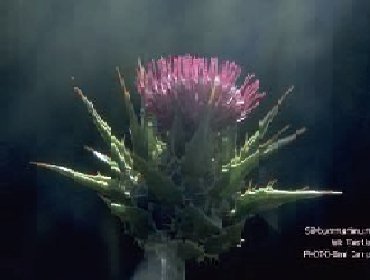
General Description
- Other names: Marian thistle, St. Mary's thistle, Our Lady's thistle
- Family: Asteraceae
- Distribution: Native to the Mediterranean region of Europe, but naturalized in California and the eastern US
Description of plant:
- tall herb with prickly leaves and a milky sap
- Small, hard fruits (achenes), a feathery tuft or pappus is removed
- Milk white veins in the leaves (originated in the milk of the Virgin Mary which once fell upon the plant)
Parts used:
- ripe fruit (not seeds), root, leaves, hull
Chemical composition
- Silymarin- chemical mixture of antihepatotoxic principles; 1-4% conc. in fruit
- Shown to consist of a large number of flavonolignans, including principally silybin accompanied by isosilybin, dehydrosilybin, silydianin, silychristin, etc.
History and folk use
- Formerly frequently cultivated in gardens
- The stalks may be eaten and are palatable and nutritious
- Young leaves may be eaten as a salad, and were sometimes baked in pies
- The heads were formerly boiled and eaten, treated like those of an Artichoke
- Thought to be a great breeder of milk and proper diet for nursing women
- Thought to have a healing property in those with snake bites
- If worn around the neck it would protect you from snake bites
- Fruit formerly thought to cure hydrophobia
- Applied externally, said to have been proven beneficial in cases of cancer
- The young, tender plant be boiled and eaten in the spring as a blood cleanser
- Fruits have been used for many years for a variety of conditions, especially liver complaints. However, medicinal use of the plant, except as a simple bitter, was practically discontinued early in the twentieth century.
Primary effects in the body
- Acts on cell membranes of liver cells to prevent the entry of toxic substances
- Stimulates protein synthesis, accelerating regeneration process & production of liver cells
- Acts as an antioxidant, with far greater free radical damage control than vitamin E
- It may offer some protection against toxic side effects from acetaminophen
Clinical applications
- Early treatment for chronic liver problems
- Rehabilitation from alcohol, solvent or IV recreational abuse
- Protects hepatocytes from heavy metal, chemical and alcohol injury
- Limits fatty degeneration and speeds up hepatitis recovery, slowing or reversing cirrhosis
- Supportive treatment for inflammatory liver conditions and cirrhosis
Toxicity
- None reported
Drug and disease interactions
- None reported
Dosage
- Fruit (seeds): 2-3 capsules up to 3 x day
- Tincture: 1:5, 60% alcohol, ½ to 1 teaspoon up to 4 x day (equal parts of root & seed with hull attached)
- Silymarin is very poorly soluble in water so is not effective as a tea (< 10% plant activity)
- Poor solubility and poor absorption from GI tract (20-50%) make active principles best administered parenterally
- Oral use requires a concentrated product
- Capsules containing 200mg of a concentrated extract representing 140mg of silymarin
Primary and Tertiary literature
Protection from Amanita phalloides intoxication Tox Appl Pharm 73 (1984)
- Severe poisoning with mortality rate of 30%
- Study in beagles
- 50 gm/kg silibinin 5 and 24 hrs post-intoxication
- 4 deaths in control group / 0 deaths with silibinin
- Reduction in elevations of GPT, GOT, AP and bilirubin with silibinin; less decrease in PT
- Mechanism of Action?
- Modification or occupance of cell membrane receptor sites
- Decrease phospholipid metabolism
- Prevention of inhibition of RNA Polymerase and RNA synthesis by toxin
Increase of Glutathione Content in the Liver Planta Medica 55 (1989)
- 200 mg/kg silymarin single dose
- Over 50% increase GSH in liver and intestine
- Selectivity
- accumulation principally in liver
- entero-hepatic recirculation
- An increase in GSH can increase conjugation/elimination of toxins and decrease lipid peroxidation
- Mechanism of action?
- Increase in membrane permeability of amino acids involved in GSH synthesis
Stimulation of DNA synthesis in malignant cell lines? Biochem Pharm 35(1986)
- 27 mg/kg silibinin prior to injection of radioactive thymidine
- Silibinin increases ribosomal RNA synthesis
- No influence on DNA synthesis in normal livers
- Large increase in DNA synthesis in hepatectomized rats / 23-35% increase in thymidine incorporation
- No influence on DNA synthesis in fast growing hepatoma cell cultures
- Mechanism of action?
- Hepatectomized rats
- If the regulatory signal for replication initiation is given, increase in rRNA and protein synthesis also accelerates DNA synthesis
- Hepatoma cells
- The rate of proliferation is already maximal and cannot be further intensified
Effect of silibinin on biliary lipid composition Journal of Hepatology 12(1991)
- The rats
- 100mg/kg or 50mg/kg silymarin for 7 days
- measured biliary cholesterol, biliary phospholipid, total bile salt and bile flow
- decrease in biliary cholesterol and phosolipid
- no change in bile flow and total bile salts
- The Humans
- 400mg/day silymarin in cholecystectomized and gallstone patients for 1 month
- significant decrease in biliary cholesterol for both groups
- Mechanism of Action?
- Found a dose dependent decrease in HMG-CoA reductase in the liver with increasing silymarin concentration
- A decrease in HMG-CoA reductase leads to a decrease in synthesis of cholesterol

Return to the MILK THISTLE Page
| Home Page | Visit Our Sponsors | Become a Sponsor |
Please read our DISCLAIMER |