

Jump to: Calcium Articles Calcium AbstractsCalcium
This section was compiled by Frank M. Painter, D.C.
Send all comments or additions to: Frankp@chiro.org
If there are terms in these articles you don't understand, you can get a definition from the Merriam Webster Medical Dictionary. If you want information about a specific disease, you can access the Merck Manual. You can also search Pub Med for more abstracts on this, or any other health topic.


Calcium Articles
Bone Health

Bone Up on Osteoporosis
Nutrition Science News (November 2000)
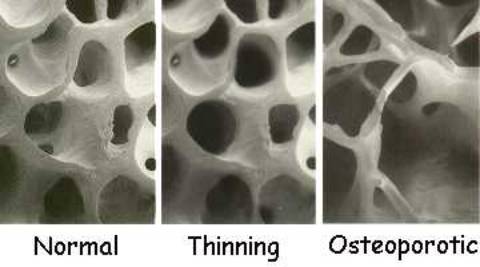
Bones are amazing living structures that are constantly being remodeled throughout life. Bones continuously mend and rebuild themselves by the opposing actions of two types of cells: the osteoblasts that form bone and the osteoclasts that resorb (destroy) bone. When the activity of the bone-destroying osteoclast cells outpaces that of bone-forming osteoblasts, the bottom line is bone loss and increased osteoporosis risk.
Building Healthy Bones For Life
Functional Foods & Nutraceuticals (February 2004)
Of all degenerative diseases, osteoporosis and its associated complications are now considered by the World Health Organization to be the second-leading health care problem, behind only cardiovascular disease. [1] As a disease largely preventable through the application of resistance exercise and diet, osteoporosis has implications for the functional foods market that have not gone un-noticed; therefore, in a report by Nutrition Business Journal, the bone health food market is projected to grow 25 per cent by 2005. [2]
Hearts & Bones: Calcium's Many Applications
Nutrition Science News (February 2000)
We all learned in grade school that calcium is a key nutrient. But our very familiarity with calcium may prevent us from fully appreciating how life depends upon this ion necessary for processes ranging from setting the body's biological cycle to movement. Calcium is the conduit for most cellular communication. Nerves and muscles depend on electrical impulses controlled by calcium switches. Perhaps because a steady supply of the element is so critical, the body has evolved a skeletal structure that stores extra calcium and doles it out when needed.
The Other Bone Builders
Nutrition Science News (October 1999)
Customers who think of strengthening bones probably think of calcium, not fruit, vegetables and whole grains. But one theory explaining osteoporosis—the disease process that reduces bone mass—suggests that the body buffers acid created during food metabolism by removing calcium from bone, which ultimately depletes the skeleton. Potassium and magnesium, both found in fruits and vegetables, help buffer acid and therefore may protect bone.
Calcium Abstracts
A Comparative Effectiveness Study of Bone Density Changes in Women
over 40 Following Three Bone Health Plans Containing Variations
of the Same Novel Plant-sourced Calcium
International Journal of Medical Sciences 2011 (Mar 2); 8 (3): 180–191
A Comparative Effectiveness Research (CER) study was conducted to compare changes in bone mineral density by following one of three bone health plans. Researchers tested 414 women over 40 years of age and 176 of the women agreed to participate in the study and to follow one of the three programs. One Plan contained a bone-health supplement with 1,000 IUs of vitamin D3 and 750 mg of a plant-sourced form of calcium for one year.
Calcium and Vitamin-D Supplementation on Bone Structural Properties
in Peripubertal Female Identical Twins:
A Randomised Controlled Trial
Osteoporosis International 2011 (Feb); 22 (2): 489–498
A randomised controlled trial was used in assessing the impact of 6 months of daily calcium and vitamin-D supplementation on trabecular and cortical bone acquisition at distal tibial and radial sites using peripheral quantitative computed tomography (pQCT). Daily supplementation was associated with increased bone density and bone strength at the distal tibia and radius.
Why Oral Calcium Supplements May Reduce Renal Stone Disease:
Report of a Clinical Pilot Study
J Clin Pathol 2001 (Jan); 54(1): 54–62
Regular calcium supplementation does not raise the product of calcium and oxalate in urine and the proportion of oxalate to calcium is reduced. Increased oral calcium, in association with a reduction of the relative proportion absorbed, may be pertinent to the prevention of calcium oxalate rich stones.
Effects of Diary Food Supplements on Bone Mineral Density
in Teenage Girls
European Journal of Nutrition 2000 (Dec); 39 (6): 256–262
Two years of using dairy products to increase bone density seemed to have some effect, but one year after the trial, no improvements in bone density was noted in the dairy group.
Comparative Absorption of Calcium Sources and Calcium Citrate
Malate for the Prevention of Osteoporosis
Alternative Medicine Review 1999 (Apr); 4 (2): 74-85 ~ FULL TEXT
Anthropologically speaking, humans were high consumers of calcium until the onset of the Agricultural Age, 10,000 years ago. Current calcium intake is one-quarter to one-third that of our evolutionary diet and, if we are genetically identical to the Late Paleolithic Homo sapiens, we may be consuming a calcium-deficient diet our bodies cannot adjust to by physiologic mechanisms. Meta-analyses of calcium and bone mass studies demonstrate supplementation of 500 to 1500 mg calcium daily improves bone mass in adolescents, young adults, older men, and postmenopausal women. Calcium citrate malate has high bioavailability and thus has been the subject of calcium studies in these populations. Positive effects have been seen in prepubertal girls, adolescents, and postmenopausal women. The addition of trace minerals and vitamin D in separate trials has improved the effect of calcium citrate malate on bone density and shown a reduction of fracture risk.
A Co-twin Study of the Effect of Calcium Supplementation
on Bone Density During Adolescence
Osteoporosis International 1997; 7 (3): 219–225
This study of 84 twins, ages 9 to 14, found that within the first six months of an 18-month study, the twin given 1,000 mg calcium/day grew heavier bones than the one taking a placebo.
Thanks to Pub Med for their
excellent MEDLINE search tool!

Return to NUTRITION
Since 7-02-2004
Updated 5-22-2022
| Home Page | Visit Our Sponsors | Become a Sponsor |
Please read our DISCLAIMER |